
You Cannot Be Tired Here. Someone Else Is More Tired.
You come home from a long day. It is not a terrible one. Just long enough to sit in your shoulders and show in…

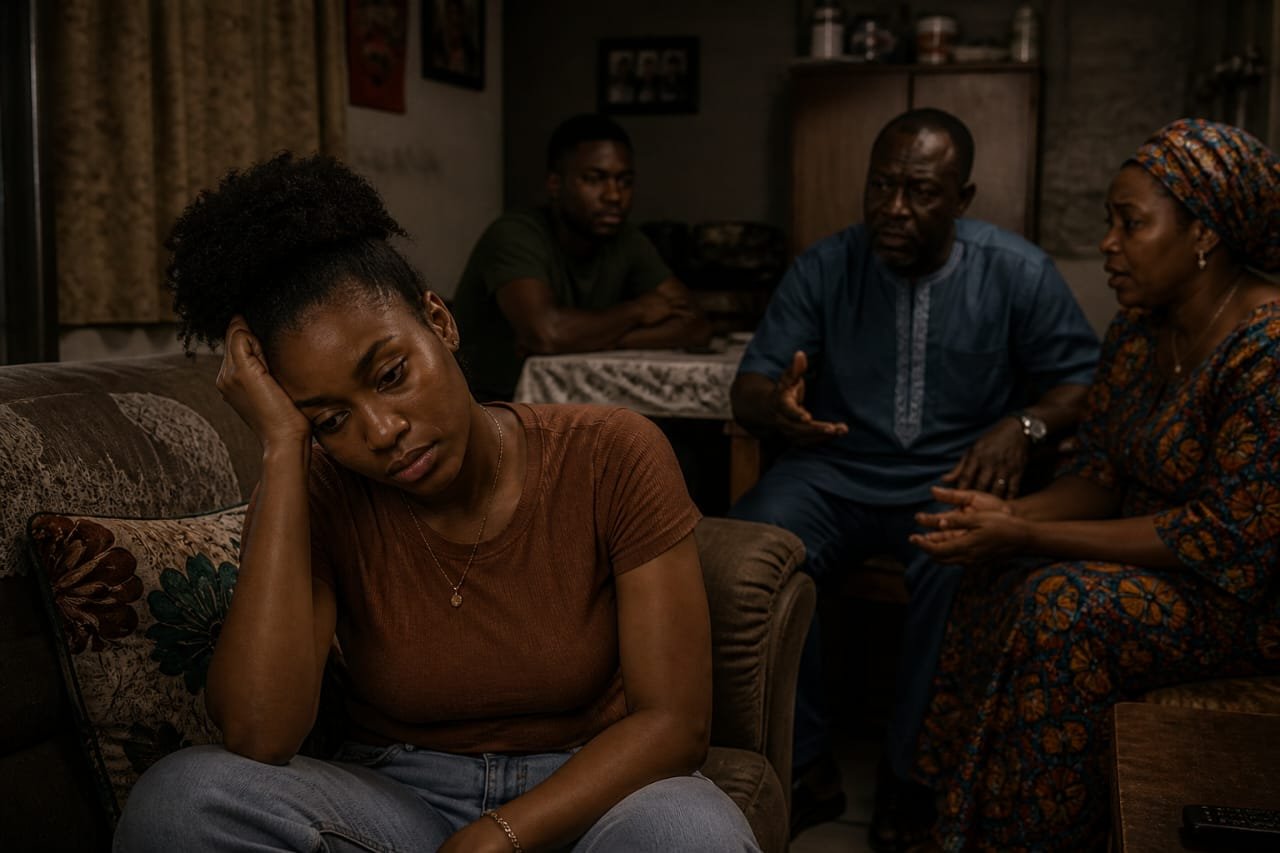
You come home from a long day.
It is not a terrible one. Just long enough to sit in your shoulders and show in your eyes. So you sit down and say, almost casually, that you are tired.
Then everything changes.
Your dad mentions how early he started his day. Your mum lists everything she has done since morning. Meanwhile, someone else brings up a relative facing something worse.
At that moment, your tiredness is no longer a feeling.
It becomes a comparison. And somehow, it loses.
How Tiredness Becomes a Competition
In many Nigerian homes, exhaustion is not simply acknowledged.
Instead, it is measured.
People compare effort. They compare responsibility. They compare sacrifice. Because of this, tiredness turns into something that must be justified.
If someone else has done more, your own experience feels smaller.
So, rather than expressing how you feel, you begin to hold back.
The Family Suffering Hierarchy
This pattern follows an unspoken structure.
Fathers often sit at the top because they carry financial responsibility. Mothers also carry a heavy load, although much of it happens quietly.
Children, even adults, fall lower on this scale.
As a result, their struggles are often treated as less serious.
Before speaking, there is always a silent question:
“Do I qualify to feel this way?”
Many times, the answer feels like no.
Why Ranking Pain Doesn’t Work
Pain does not operate like a scoreboard.
One person’s stress does not cancel another’s. One person’s exhaustion does not erase someone else’s.
However, the habit of comparison creates silence.
People begin to suppress what they feel. They start to believe that expressing tiredness is unnecessary or even wrong.
Over time, everyone learns to endure quietly.
What Happens When Nobody Speaks
When feelings are not acknowledged, they do not disappear.
Instead, they build up.
The father continues working without pause. The mother carries responsibilities without rest. The children learn to hide discomfort.
On the surface, everything looks stable.
Underneath, everyone is exhausted.
Acknowledgment is simple yet powerful
It does not take much to respond differently.
A simple statement can change everything.
“You look tired. Are you okay?”
That moment does not solve the problem.
However, it removes the feeling of being invisible.
Sometimes, that is enough.
The Long-Term Effect of Ignoring It
When people grow up in environments where feelings are ranked, they carry it forward.
They struggle to ask for help and minimise their own needs. They believe support must be earned.
Because of this, silence becomes normal.
And when emotions finally surface, they often come out in overwhelming ways.
Let Tiredness Exist Without Comparison
Everyone in the house can feel tired at the same time.
Your father can feel it. Your mother can feel it. You can feel it.
None of those experiences cancel each other.
Instead of comparing, allow space.
Allow expression.
Final Reflection
Exhaustion is not a competition.
There is no winner.
When people start ranking pain, everyone loses in different ways.
So, next time someone says they are tired, pause before comparing.
Listen first.
Because sometimes, being heard is more important than being corrected.
0 responses