
When Did We Start Treating Every Experience as Content?
We are treating every experience as content and calling it creativity. But somewhere between the camera roll and the caption, we stopped actually living.

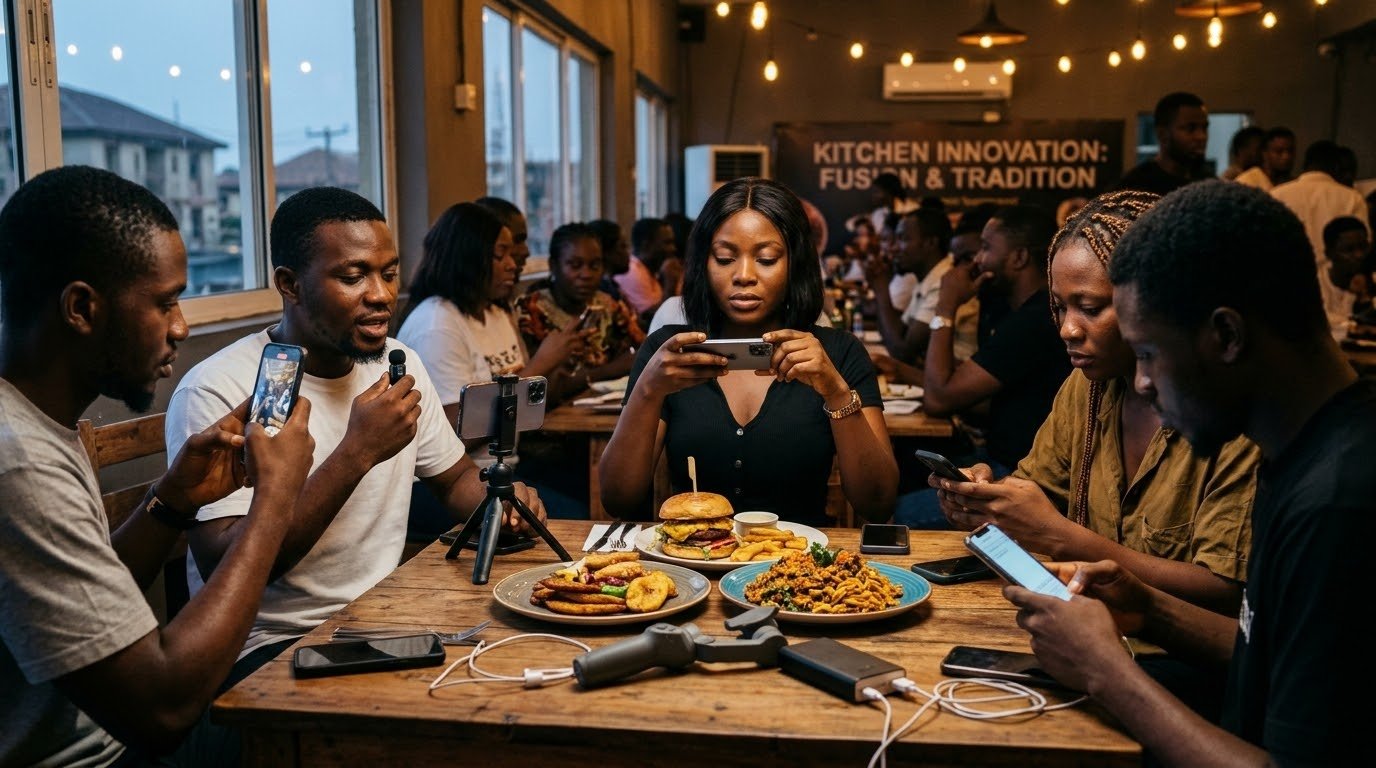
Think about the last time something beautiful happened to you.
It could have been a beautiful sunset, a delicious meal, or a special moment with someone you love. Perhaps it was simply a quiet, comforting experience that came at just the right time.
Now ask yourself this honestly. What was the first thing you did?
You reached for your phone.
Not to call someone. It’s not to sit inside the moment a little longer. You reached for it to record, to post, to share. Because somewhere along the line, treating every experience as content became the most natural thing in the world. So natural that most of us do not even notice we are doing it anymore.
That is the thing we need to talk about.
How Did We Get Here?
It did not happen overnight.
It started innocently enough. Facebook gave us a place to share our lives. Instagram made those lives look beautiful. Snapchat made everything feel urgent and temporary. Then TikTok arrived and completely rewired how we think about moments.
Suddenly, every experience had potential. A dinner out was not just dinner. It was a flat lay waiting to happen. A vacation was not just rest. It was a travel series. A bad day at work was not just a hard day. It was a talking-head video about burnout that might go viral.
And for Nigerians specifically, social media did not just offer an audience. It offered something deeper. It offered visibility. It offered proof. Proof that you are doing well, living well, going places, and becoming someone.
So we started performing our lives. Quietly at first. Then loudly. Then constantly.
The Moment You Realized Something Was Off
You have had this moment. Almost everyone has.
You are at a concert, and the entire crowd has their phones in the air. Nobody is actually watching the performance. Everyone is filming it for people who are not there. And the people who are there are missing it entirely because they are too busy capturing it.
Or you are at a dinner with friends. Someone orders food and before anyone touches their plate, five phones appear from five different directions. The food goes cold. The moment goes stiff. Everyone is waiting for the perfect shot.
Or something genuinely moving happens to you. Something private and real. And your first instinct is not to feel it. Your first instinct is to think about how to describe it in a caption.
That pause between the experience and the feeling is where something important is being lost.
The Nigerian Content Trap
In Nigeria, this has taken on a very specific flavor.
Nigerian social media is about more than sharing experiences; it is also about projecting an image. A single post can quietly communicate success, relevance and the impression of living well, while reassuring others that life is moving forward and that no one is being left behind.
So the pressure to document everything is not just a social media habit. It is tied to deeper anxieties about status, perception, and belonging.
The owambe photos are not just memories. They are proof that you were invited. The vacation pictures are not just travel logs. They are status updates. The gym selfies are not just fitness motivation. They are announcements that you are the kind of person who goes to the gym.
Nothing is allowed to just be. Everything has to mean something for the audience.
And the audience is never satisfied.
What We Are Actually Losing
Here is the part nobody wants to sit with.
When you are thinking about content, you are not fully present. Those two things cannot exist in the same headspace at the same time. Presence requires full attention. Content creation requires an observer’s distance.
So, every time you step back to frame a moment, you step out of it a little.
The meal you barely tasted because you were arranging the shot. The conversation you half-listened to because you were thinking about how to quote it later. The view you spent three minutes photographing but only ten seconds actually looking at.
These are not dramatic losses in isolation. But they add up. Over months and years, the habit of documenting everything creates a life that looks full from the outside and feels strangely empty from the inside.
The photos are saved, the content has been posted, and the camera roll is filled with memories that may never be revisited.
But did you actually live those moments? Or did you produce them?
The Creator Economy Made It Worse
To be fair, the creator economy changed the rules.
When content creation becomes a source of income, whether through brand partnerships, TikTok views or Instagram monetisation, separating everyday life from the demands of producing content can become increasingly difficult.
For many young Nigerians, content creation is not vanity. It is survival. It is an income stream in an economy that offers very few reliable ones. And there is nothing wrong with that.
But, even for professional creators, there is a cost worth acknowledging. When everything is potential content, nothing is truly private. Constant demands from followers can make taking a break feel like neglecting an obligation. When online engagement becomes a measure of success, everyday life can start to feel like an interruption to the very platform meant to support it.
The job bleeds into the life until there is no clear boundary between them. And that is a problem whether you are being paid for it or not.
The Comparison Machine We Built
There is another layer to this that we do not discuss honestly enough.
When everyone is treating every experience as content, everyone is performing their best life simultaneously. And you are watching all of it from wherever you actually are.
Someone is posting a beach vacation. Someone else just closed a big deal. Another person is getting engaged. One more just bought a car. And you are sitting in your room on a Wednesday evening wondering why your life feels so small compared to everyone else’s highlight reel.
The comparison is not accidental. It is the architecture. Social media was built to show you the best of everyone else’s life all at once. It was designed to make you feel like you are falling behind.
And the more everyone documents and posts and shares, the more material there is for you to measure yourself against. The machine feeds itself.
Some People Are Quietly Opting Out everyone is performing, though.
There is a growing number of people, especially among younger Nigerians, who are deliberately choosing not to post certain things. The relationship they protect from the timeline. The achievement they sit with privately before sharing. The vacation they actually take without a single story update.
They are not doing it for a trend. They are doing it because they figured something out. That some things are more valuable when they belong only to you. That privacy is not the same as secrecy. That a moment does not need an audience to be real.
These people are harder to see, obviously. Because they are not posting. But they exist. And there is something genuinely countercultural about choosing presence over performance in 2026.
How to Actually Reclaim Your Experiences
Nobody is saying delete your apps and move to a farm. That is not realistic and it is not the point.
But there are small, deliberate shifts that make a real difference.
Try arriving somewhere and putting your phone away for the first fifteen minutes. Just be there. Let the moment exist before you decide what to do with it.
Ask yourself one honest question before you post anything. Am I sharing this because it genuinely adds something? Or am I sharing it because I want to be seen?
Protect at least one category of your life from the internet entirely. One relationship, one hobby, one routine that exists only for you and nobody else.
And practice feeling things before you frame them. The sunset first. The caption later. Or never. The sunset does not need a caption to have been beautiful.
The Conclusion
There is nothing wrong with sharing your life. Human beings have always told stories about their experiences. That is not new.
What is new is the speed, the scale, and the pressure. The expectation that every moment is a potential post. The anxiety that an experience that is not documented somehow does not count. The quiet exhaustion of performing yourself for an audience every single day.
Treating every experience as content is not creativity. Not always. Sometimes it is just a habit we picked up so gradually that we forgot to question it.
A meal can be enjoyed without a single photograph. A beautiful place can remain a personal memory, and a deeply felt emotion does not need to become a caption to be meaningful.
Some moments are not content.
They are just your life. And your life is allowed to belong to you.
Forward this to someone who needs to put their phone down. Or post it. The irony is intentional.
0 responses