
The Illusion of Stability in a Fast-Changing World
Stability often feels like the goal. People chase it, plan for it, and measure progress by how close they are to achieving it. A…

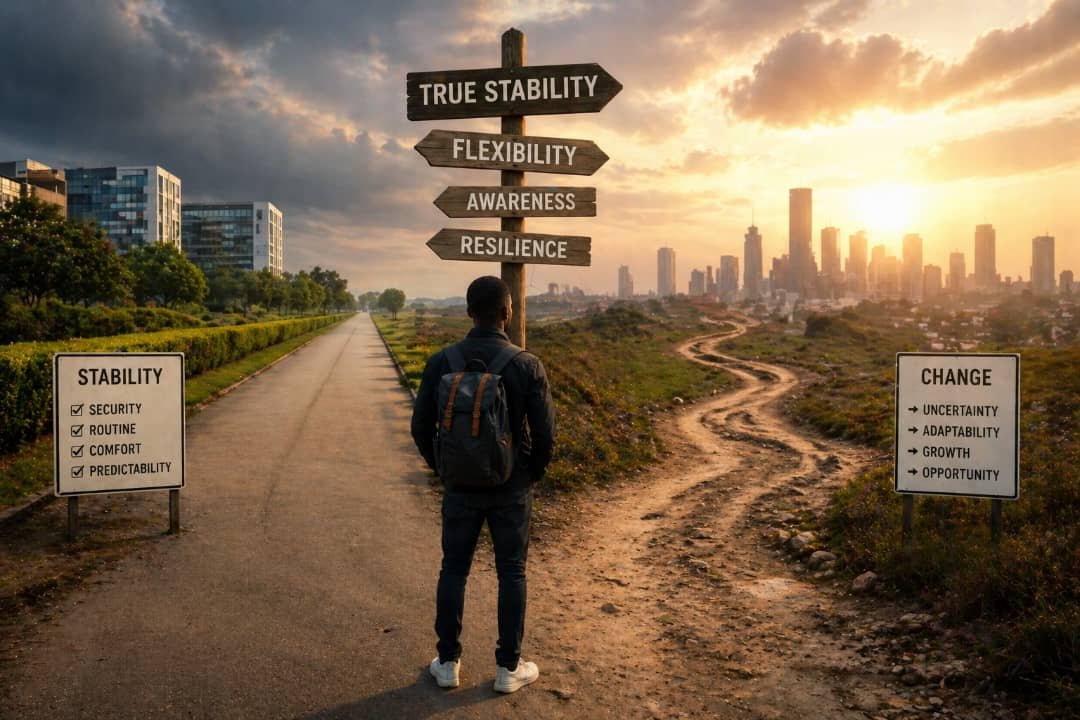
Stability often feels like the goal. People chase it, plan for it, and measure progress by how close they are to achieving it. A stable job, a stable income, and a stable routine create a sense of control. As a result, life feels predictable, organized, and safe.
However, that sense of stability can be misleading.
Why stability feels secure
In many cases, stability is tied to external factors. Jobs, routines, and systems are expected to remain consistent over time. Because of this, people begin to trust that what is working now will continue to work in the future.
For a while, that belief holds.
Yet, the world does not stay still.
The illusion of permanence
Stability often reflects a moment, not a permanent state. It shows how things look now, not how they will remain.
For example, a job may feel secure until the market changes. A routine may feel solid until circumstances shift. Even carefully planned paths can be disrupted without warning.
As a result, what once felt reliable can suddenly feel uncertain.
The risk of holding on too tightly
The problem is not the desire for stability. Instead, the challenge lies in assuming it will last without change.
When stability is held too tightly, adaptation becomes difficult. Expectations are built around consistency, even in an environment that constantly evolves. Over time, this creates a gap between reality and expectation.
A world that keeps changing
At the same time, change is no longer slow or predictable. It happens quickly and often without clear signals. Technology advances, industries shift, and new opportunities replace old ones.
Because of this, what worked a few years ago may no longer apply today.
Therefore, relying only on fixed ideas of security becomes risky.
Redefining stability
This does not mean stability has no value. Instead, it needs to be understood differently.
Rather than being tied to external situations, stability can be built internally. Skills, adaptability, and awareness create a stronger foundation. Unlike external stability, this type can adjust when circumstances change.
As a result, stability becomes something that moves with you.
The difference between comfort and stability
It is also important to separate comfort from stability. Something can feel familiar without being truly secure.
When comfort becomes the priority, growth often slows down. People remain in situations that no longer serve them because they feel known. Over time, that comfort can lead to stagnation.
Why does flexibility matter
In contrast, a fast-changing world rewards flexibility. It favors those who can adjust, respond, and rethink their approach when needed.
This does not mean structure should be abandoned. Instead, it means structure should be flexible enough to shift without breaking.
A new definition of stability
The idea of stability begins to change. It becomes less about staying in one place and more about maintaining balance through change.
Instead of avoiding uncertainty, the focus shifts to handling it effectively.
The truth about staying grounded
In the end, the world will continue to change. Systems will evolve, and new challenges will appear. Stability, as it is often defined, will continue to shift.
Therefore, the real question is not whether stability exists but how it is defined.
Because in a world that never stops moving, true stability does not come from standing still.
It comes from knowing you can keep moving and still remain grounded.
0 responses