
are we the most resilient generation or the traumatized one?
Somewhere between laughing at memes about suffering and casually saying “it is well,” a strange question started forming in the back of our minds.…

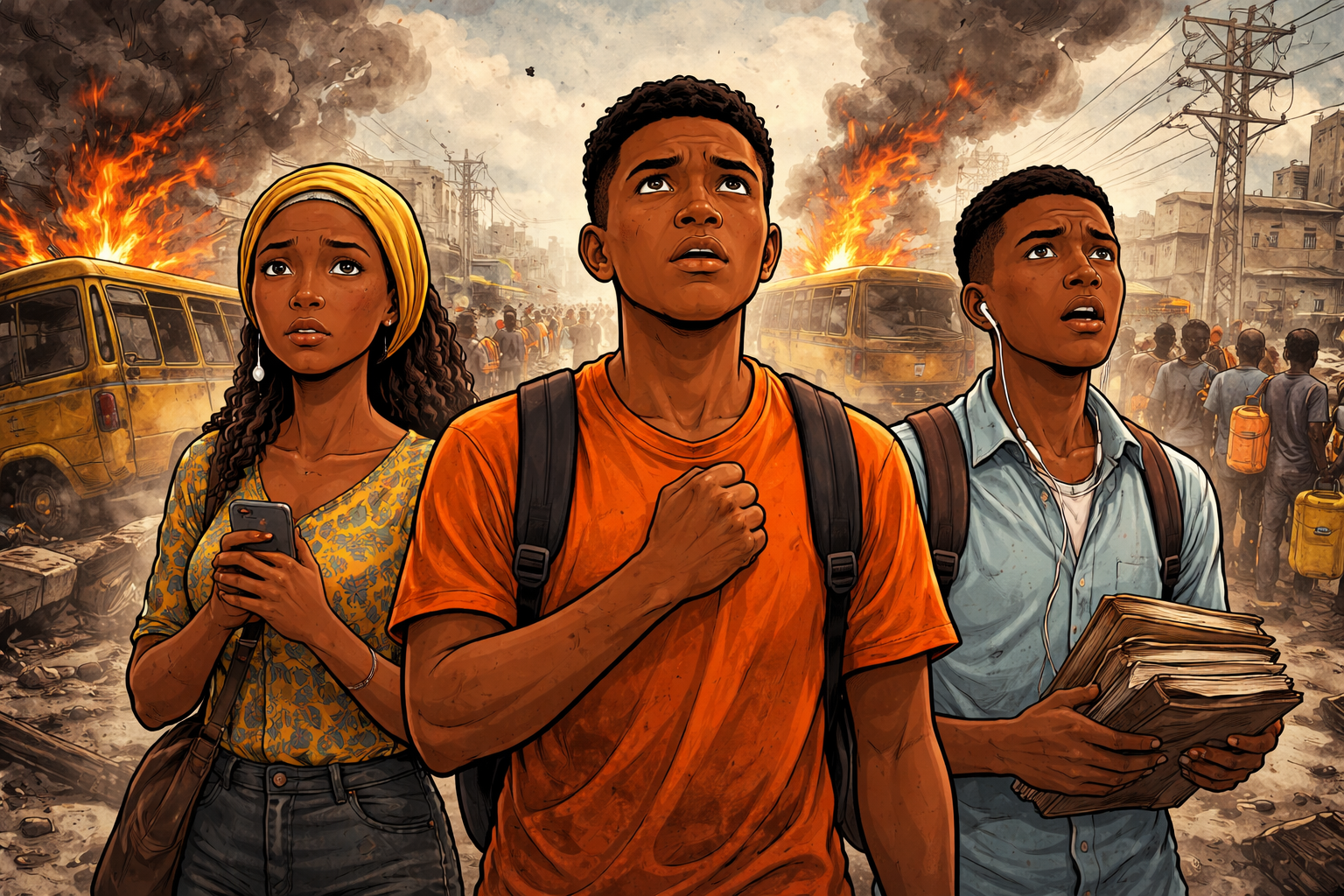
Somewhere between laughing at memes about suffering and casually saying “it is well,” a strange question started forming in the back of our minds.
The question: “Are we actually the most resilient generation or are we just the most traumatized one that learned to laugh?”
Because the way young Nigerians handle chaos sometimes feels less like strength and more like survival with excellent comedic timing.
Think about it. You wake up, check your phone, and before your brain even finish loading, you’ve already seen three jokes about fuel prices, two memes about the ever-increasing Lagos rent, and one thread about how one’s salary now has the purchasing power of just pure vibes.
And the replies? Even funnier.
We laugh so easily that an outsider might assume we’re emotionally indestructible. Meanwhile, half the jokes are just people disguising stress in 280 characters.
Somewhere along the line, our generation mastered the art of turning pressure into punchlines.
Take the classic Nigerian coping strategy: laugh before the problem laughs at you.
Fuel price increases? Someone already made a meme.
Network fails when you’re trying to transfer money? Meme.
Salary finishes before the month even clears its throat? Meme.
We have turned humour into emotional infrastructure. If laughter generated electricity, Nigeria would have 24-hour power supply by now.
But sometimes those jokes are not just jokes. Sometimes they’re emotional camouflage. Because behind every “God when?” tweet is someone staring at their bank balance as if it had personally betrayed them.
Then there is the Nigerian superpower we rarely acknowledge: radical adaptation. This generation can adjust to chaos at frightening speed.
Light goes off during an important Zoom meeting? You calmly switch from WIFI to data. Data finishes? You start hotspot negotiations with a neighbour like diplomats discussing a peace treaty. Salary delays? Side hustle activated. Side hustle struggling? Another side hustle is already under construction.
At this point, Nigerians under thirty have more contingency plans than most governments.
Plan A.
Plan B.
Plan “God abeg.”
Resilience? Absolutely. But it’s also fair to ask why we need this many survival skills before age thirty.
Another strange thing about our generation is how casually we discuss extremely stressful situations. Imagine someone says, “My boss embarrassed me in front of the whole office today.” The response will be someting like, “Ah, character development.”
Another person says, “My landlord just increased rent by 60 percent,” and everybody replies, “Na life.”
Citizens of other countries process stress with therapy. Nigerians process stress with the group chat. The group chat will respond with something like, “Stay strong soldier,” followed by five laughing emojis and a meme of someone collapsing dramatically.
And somehow… it helps.
Because shared suffering creates a strange kind of community?
Which is why Nigerians can stand hours of traffic and still laugh at a stranger shouting jokes from another car.
Someone yells, “Driver if we move small again I will propose to you!”
Everybody laughs.
Traffic still hasn’t moved. But somehow the laughter makes the situation feel less like punishment.
We have turned humour into a national coping mechanism. Because when systems fail, Nigerians improvise.
Even emotionally. But beneath the jokes, there is also a quieter reality nobody posts online.
The exhaustion.
The pressure to “make it.”
The constant hustle.
The responsibilities that arrive suspiciously early in life.
You graduate and suddenly life is no longer just about you.
You’re helping at home.
Supporting siblings.
Sending “small something” whenever family calls.
Meanwhile you’re still trying to figure out your own life. And somehow society still expects you to be optimistic, hardworking, mentally stable, and financially successful at the same time.
Resilience looks impressive from the outside. Inside, it sometimes feels like running a marathon with no water break.
So yes, maybe this generation is incredibly resilient. But resilience doesn’t mean the road wasn’t rough. We didn’t wake up one morning and decide to be strong. Strength was forced on us by circumstances, and over time we simply learned how to carry it.
We learned how to hustle through uncertainty.
We learned how to adjust when plans collapse.
And most importantly, we learned how to laugh at situations that would break other people. Because sometimes laughter is not proof that everything is okay. Sometimes it’s just proof that we’re still standing.
So are we the most resilient generation?
Maybe.
But we might also be the first generation that figured out something important.
Which is…
If life is going to be this chaotic, you might as well laugh loudly… because crying in this economy is simply not cost-effective.
0 responses